
Published on
Esketamine vs TMS for Treatment-Resistant Depression
You've tried antidepressants, waited out the six-to-eight-week timelines, and you're still searching for something that works. Now you're weighing two options you may have heard about: esketamine, the nasal spray sold as Spravato, and transcranial magnetic stimulation (TMS), the magnetic brain stimulation therapy. Both are FDA-authorized for depression that hasn't responded to standard medication.
If you're in that position, you're not unusual. Roughly one in three people with major depression don't improve enough after two medication trials, which can leave you comparing interventions most people have never heard of.
The short answer: Neither treatment clearly wins. Esketamine usually works faster, while TMS has fewer day-of safety restrictions. The better choice depends on how quickly you need relief and which medical or logistical limits apply.
Esketamine (Spravato)
Esketamine is a nasal spray derived from ketamine, a medication used in anesthesia for decades. Most antidepressants work by adjusting serotonin, norepinephrine, or dopamine. Esketamine works on a different brain chemical called glutamate, which lets it affect more brain cells at once. The FDA label states plainly that the exact mechanism behind its antidepressant effect is still unknown.
The FDA approved Spravato for treatment-resistant depression in adults in 2019. In this context, treatment-resistant means depression that hasn't responded to at least two antidepressants. In January 2025, the FDA also approved it as a standalone treatment, no longer requiring an oral antidepressant alongside it.
By acting on glutamate rather than serotonin, esketamine appears to help your brain form new connections faster than traditional antidepressants can. A shift can appear within hours to a few days rather than weeks. When it works, people describe it as a drop in volume: the constant background hum of dread or emptiness quiets enough that you can function, sometimes within the first few days.
Spravato can never go home with you. Every dose is self-administered under direct observation in a certified clinic, because it's a Schedule III controlled substance. You'll skip food for two hours beforehand and fluids for 30 minutes, then rest under observation for about two hours while dizziness and dissociation peak and fade.
TMS (Transcranial Magnetic Stimulation)
How TMS Works
TMS uses a magnetic coil placed against your scalp to deliver rapid pulses. These pulses generate a small electrical current in a targeted brain region. No anesthesia, no sedation, no surgery. The magnetic field is about as strong as an MRI scanner.
The pulses target a brain area involved in mood regulation, and repeated sessions prompt those circuits to rewire into more stable communication patterns. The effects tend to outlast the stimulation itself.
The FDA cleared the first TMS device for treatment-resistant depression in 2008. You stay fully awake throughout.
What to Expect
TMS builds its effect gradually. Improvement often begins around weeks two to four. The strongest effects tend to appear near the end of the treatment course. When it works, the shift feels steadier than esketamine's faster onset and grows week over week, until you notice you're functioning without the usual internal negotiation.
The standard course runs five sessions a week, Monday through Friday, for four to six weeks, roughly 20 to 36 sessions total. Each standard session lasts around 37 minutes, though newer theta burst protocols require only about three minutes of actual stimulation.
Your first appointment takes about an hour and includes mapping, where your provider finds the right coil placement and calibrates the intensity. After that, sessions feel like light tapping on your head in fast bursts. Most people don't need recovery time.
An accelerated option called Stanford Accelerated Intelligent Neuromodulation Therapy (SAINT) compresses TMS into five days of multiple daily sessions, with targeting guided by functional MRI. It's FDA-cleared and showed strong early trial results, but availability remains limited and it's typically self-pay.
Key Differences
No completed head-to-head trials directly compare esketamine and TMS. Indirect comparisons exist, and the comparative evidence quality is low to very low. Be skeptical of any source claiming one is clearly superior.
Practical differences are easier to compare side by side.
Factor | Esketamine (Spravato) | TMS |
|---|---|---|
Speed of relief | As early as 2 hours; often 24 to 72 hours | Typically 2 to 4 weeks |
Treatment setting | Certified clinic only | Outpatient, no special certification |
Time per session | ~3 hours (dose plus 2-hour monitoring) | 20 to 40 minutes (some ~3 min) |
Sessions per week (start) | Twice weekly | Five times weekly |
Driving after | Not until next day | Same day, drive yourself |
Dissociation | Common (61 to 84%) | Not applicable |
Memory effects | Day-of impairment | None |
Main safety reason to avoid | Vascular disease, brain bleed history | Metal implants near the head |
Cost per session (no insurance) | $600 to $1,200 | $300 to $500 |
Cost and Logistics
Without insurance, esketamine runs $600 to $1,200 per session; TMS runs $300 to $500. Insurance changes the math. With commercial insurance, esketamine can drop to as low as $10 per session with the manufacturer savings card, and TMS copays typically fall between $20 and $60. Both usually require prior authorization and documentation that at least two antidepressants haven't worked.
Logistics may matter more than price. Esketamine means about three hours on-site each visit and a driver every time. TMS means daily visits for weeks, but each is short. The treatment that looks simpler on paper may not be simpler in your actual schedule.
Efficacy
Looking at each treatment's own trial data: in TRANSFORM-2, the pivotal trial behind Spravato's FDA approval, about 69% of patients on esketamine plus an antidepressant responded by day 28, compared to 52% on antidepressant plus placebo.
For standard TMS in treatment-resistant populations, published meta-analyses report response rates of roughly 45 to 60% and remission rates of up to 36%. These numbers come from separate studies with different designs and patient populations, so they can't be compared directly.
A 2025 comparison of data from the major studies used to evaluate each treatment found that both outperformed switching antidepressants alone at four weeks. TMS showed a slightly greater reduction in symptoms than esketamine, but the difference was small enough that it could have been due to chance.
In a matched real-world group of 1,690 patients per treatment, overall effectiveness was comparable. Esketamine showed a clearer protective effect on suicide-related outcomes in people aged 45 to 65. If both options are medically reasonable, the deciding factor may be which one you can start, tolerate, and complete.
Safety
Both treatments are well-established, but their risk profiles differ. Esketamine carries an FDA boxed warning for sedation and dissociation, plus transient blood pressure increases that require monitoring. TMS side effects tend to be mild, usually headache or scalp discomfort; lightheadedness can happen too.
Serious TMS risks like seizures are very rare.
In real-world data, TMS was associated with lower risks of hospitalization and arrhythmia than esketamine, along with fewer injuries. TMS is not associated with memory loss or cognitive impairment. If side effects from past treatments have made you cautious, that difference is worth taking seriously.
How to Decide Between Them
Which Option Fits Your Situation
Your medical history and day-to-day circumstances should guide the choice.
Esketamine may make more sense if you need relief quickly, or you're dealing with acute suicidal thinking alongside depression. It may also be the only option if metal implants near the treatment area make TMS unsafe. A seizure history does not automatically rule out TMS, but it does require careful screening.
If you'd rather avoid a medication and its day-of effects, TMS is worth considering. The same goes if you're sensitive to side effects or have vascular concerns that make esketamine riskier. TMS also fits if you can commit to a short daily appointment for several weeks and prefer to drive yourself.
At-home ketamine therapy may make more sense if clinic logistics are your main barrier and a licensed clinical team determines ketamine therapy is appropriate for your medical history and safety needs.
What Maintenance Looks Like
Maintenance needs matter too. Esketamine maintenance often means ongoing clinic visits, sometimes weekly or more often over the course of a year. In the SUSTAIN-1 trial, continuing esketamine after initial improvement cut the risk of relapse roughly in half compared to switching to antidepressant alone.
For TMS, published follow-up data suggest that about two-thirds of responders maintain meaningful improvement at three months, with roughly half still responding at six to twelve months. If symptoms do return after TMS, a repeat course often works again.
Neither treatment guarantees a permanent fix, and knowing what maintenance looks like for each option is part of making the right choice.
How Innerwell's At-Home Ketamine Therapy Works
Esketamine and TMS aren't your only options. Both require repeated clinic visits, and for some people that's the real barrier. At-home ketamine therapy removes it.
This isn't a prescription mailed with minimal supervision. Innerwell combines ketamine therapy with licensed psychotherapist guidance throughout. Every therapist at Innerwell holds a Master's or Doctoral degree. Preparation and integration sessions around each dose give the experience structure and intention: the medication opens a door, and therapy helps you walk through it.
The process:
- Evaluation: A licensed clinician evaluates your medical history, current symptoms, and safety considerations to determine whether ketamine therapy is appropriate.
- Delivery: If prescribed, Innerwell ships your sublingual racemic ketamine tablets directly to you. The program uses a form of ketamine that includes both main versions of the molecule.
- Preparation and integration: Around each dose, you meet with a licensed therapist for preparation and integration sessions.
- Ongoing monitoring: Your care team monitors your progress through telehealth follow-up and secure messaging, with treatment adjustments as symptoms and safety factors change. After the initial program, maintenance plans are available to sustain your improvement without starting over.
Pricing: Spravato is typically the only ketamine-derived treatment for depression that insurance covers. Innerwell treatment plans are $54 to $75 per session with insurance and $83 to $125 per session for self-pay. Plan type and location affect the exact price. Insurance coverage is available in California and New York, with self-pay available elsewhere. Confirm what your plan covers before you start.
Program outcomes: Results vary, but program averages are strong. Across Innerwell's program: 69% reduction in depression symptoms after 10 weeks; 60% reduction in anxiety symptoms after 10 weeks; 87% of people see improvement within 4 weeks; and a 4.7 out of 5 star average patient rating.
Ketamine's use for depression is off-label. The FDA has approved ketamine as an anesthetic, not specifically for psychiatric conditions. Esketamine (Spravato), a ketamine-derived nasal spray, does have FDA approval for depression, but sublingual and IV ketamine do not.
A clinician reviews your history first, since ketamine therapy isn't right for everyone. It may not be appropriate for people with uncontrolled high blood pressure, a history of psychosis, unstable heart disease, active substance-use disorder, or pregnancy.
What to Do Next
If at-home ketamine therapy is on your list, Innerwell's free assessment is the simplest next step. A licensed clinician reviews your history, symptoms, medications, and safety factors before treatment is prescribed.
If you're leaning toward Spravato or TMS, ask the certified clinic or TMS center about contraindications, insurance requirements, and how maintenance would work.
Take the free assessment to see if ketamine therapy might be right for you.
Frequently Asked Questions
What happens if esketamine or TMS doesn't work?
Neither treatment helps everyone, and partial response is common. If esketamine doesn't produce enough improvement after the initial treatment phase, the prescribing clinic may adjust dosing or frequency before recommending a switch. If TMS falls short, some providers offer a second course or a different coil protocol. At-home ketamine therapy is another option worth evaluating if clinic-based treatments haven't worked or haven't been practical to maintain.
Can you do esketamine and TMS at the same time?
Combining brain stimulation with ketamine-based treatment is an area of active research, but early evidence is limited and the combination is not standard practice. If you're considering both, the treating clinic should review your diagnosis, medications, seizure risk, blood pressure history, and treatment response before combining them.
Which should I try first?
No single answer fits everyone. Metal implants near your head may rule out TMS, and vascular disease makes esketamine riskier. For Spravato or TMS, the certified clinic can screen for urgency, seizure history, medication sensitivity, transportation, and work schedule.

87% of Innerwell patients report improvement within 4 weeks
At-home treatment — no clinic visits
1/4th of the price compared to offline clinics
Led by licensed psychiatrists and therapists specialized in ketamine therapy
Insurance accepted in selected states

Jul 28, 2026
Do Ketamine Lozenges Work for Pain?
Innerwell Team

Jul 27, 2026
Ketamine vs ECT: Choosing a Therapy for Resistant Depression
Innerwell Team

Jul 27, 2026
Spravato vs SSRIs: Finding Relief When Antidepressants Fail
Innerwell Team

Jul 27, 2026
Ketamine Therapy for Traumatic Brain Injury: Complete Guide
Innerwell Team

Jul 25, 2026
Is Ketamine Therapy Legal in New Mexico?
Innerwell Team

Jul 25, 2026
Is Ketamine Therapy Legal in Ohio?
Innerwell Team

Jul 25, 2026
Ketamine vs benzodiazepines for depression and anxiety
Innerwell Team

Jul 10, 2026
Is Ketamine Therapy Legal in Georgia?
Innerwell Team

Jul 10, 2026
9 Effective Alternatives to Spravato for Depression
Innerwell Team

Jul 10, 2026
Is Ketamine Therapy Legal in Florida?
Innerwell Team

Jul 9, 2026
Sublingual vs Nasal Ketamine: Which Route Works Best?
Innerwell Team

Jul 9, 2026
Is Ketamine Therapy Legal in Maine?
Innerwell Team

Jul 8, 2026
Ketamine IV vs Nasal: Which Is Right for You?
Innerwell Team

Jul 5, 2026
Spravato vs Ketamine Infusion: How They Compare
Innerwell Team

Jul 5, 2026
Is Ketamine Therapy Legal in Missouri?
Innerwell Team

Jul 5, 2026
Is Ketamine Therapy Legal in Pennsylvania?
Innerwell Team

Jun 24, 2026
Ketamine Therapy for Depression in Older Adults: Complete Guide
Innerwell Team

Jun 20, 2026
Is Ketamine Therapy Legal in Utah?
Innerwell Team

Jun 20, 2026
Is Ketamine Therapy Legal in Indiana?
Innerwell Team

Jun 13, 2026
Ketamine Therapy for Narcissism: Complete Guide
Innerwell Team

Jun 13, 2026
Is Ketamine Therapy Legal in New York?
Innerwell Team

Jun 13, 2026
Is Ketamine Therapy Legal in California?
Innerwell Team

Jun 12, 2026
Alternatives to Zoloft: Medications, Natural, and Emerging Options
Innerwell Team

Jun 12, 2026
Alternatives to Esketamine: Complete Guide
Innerwell Team

Jun 12, 2026
Ketamine vs SSRIs: Which Works Faster for Anxiety?
Innerwell Team

Jun 12, 2026
Does Medicaid Cover Ketamine Therapy?
Innerwell Team

Jun 12, 2026
Is Ketamine Therapy Legal in Wisconsin?
Innerwell Team

May 29, 2026
Is Ketamine Therapy Legal in Texas?
Innerwell Team

May 29, 2026
Ketamine Therapy for ALS: Complete Guide
Innerwell Team

May 16, 2026
10 Gabapentin Alternatives for Anxiety
Innerwell Team

May 15, 2026
8 Best Xanax Alternatives for Anxiety Treatment
Innerwell Team

May 6, 2026
Ketamine vs Zoloft: Which Offers Faster Relief?
Innerwell Team

May 6, 2026
Ketamine vs Prozac: Which Works Faster for Depression?
Innerwell Team

May 6, 2026
Ketamine vs Lexapro: Which Works Faster for Depression?
Innerwell Team

Apr 23, 2026
Ketamine Maintenance Schedule: What to Expect
Innerwell Team

Apr 17, 2026
Ketamine Therapy for Couples: Complete Guide

Apr 7, 2026
Why Ketamine Integration Matters in Psychedelic Therapy
Innerwell Team

Apr 7, 2026
Ketamine Therapy for Veterans
Innerwell Team

Apr 6, 2026
Does BCBS Cover Ketamine Therapy?
Innerwell Team

Mar 24, 2026
Ketamine Infusion vs Oral Ketamine for Depression
Innerwell Team

Mar 24, 2026
Do You Qualify for Ketamine Therapy?
Innerwell Team

Mar 20, 2026
How Ketamine Therapy Is Administered Safely
Innerwell Team

Mar 19, 2026
Telehealth Ketamine Treatment: Benefits & Safety
Innerwell Team

Mar 4, 2026
Online Ketamine Therapy: How It Works, What It Costs, and How to Start
Innerwell Team

Mar 4, 2026
How to Get Ketamine Therapy Covered by Insurance
Innerwell Team

Mar 4, 2026
Is Ketamine Therapy Covered By Insurance? State-by-State Guide
Innerwell Team

Mar 4, 2026
Spravato vs Ketamine Infusion: Which Is Right for You?
Innerwell Team

Mar 4, 2026
How to Find the Best Online Ketamine Treatment
Innerwell Team

Feb 25, 2026
Ketamine vs Traditional Antidepressants: Key Differences
Innerwell Team

Feb 25, 2026
Ketamine vs Psychedelics: Treatment Comparison Guide
Innerwell Team

Feb 18, 2026
Ketamine vs MDMA Therapy: Which Psychedelic Treatment Fits You?
Innerwell Team

Feb 9, 2026
Ketamine vs Xanax: Which Works Best for Anxiety?
Innerwell Team

Feb 8, 2026
Ketamine vs SSRIs for Depression
Innerwell Team

Feb 8, 2026
Emotional Safety in Relationships: Signs, Examples, and How to Build It
Innerwell Team

Feb 2, 2026
Ketamine 101: A Complete Guide to Ketamine Therapy
Innerwell Team

Oct 31, 2025
Ketamine Laws by State: 2026 Guide
Innerwell Team

Jun 16, 2025
Ketamine Therapy for Anxiety: A Promising Treatment
Innerwell Team

Jun 16, 2025
Healing Social Anxiety with Ketamine Therapy
Innerwell Team
Jun 10, 2025
What is Ketamine Therapy
Innerwell Team

May 2, 2025
Ketamine Therapy for Childhood Trauma
Innerwell Team

Apr 29, 2025
The Science Behind Ketamine Therapy: How It Works, How Fast, and What Research Shows
Innerwell Team

Mar 5, 2025
Ketamine Therapy for Depression and Anxiety
Innerwell Team

Oct 17, 2024
A Companion for Your Ketamine-Assisted Therapy: The Role of a Peer Treatment Companion
Anthony Mangia

Aug 27, 2024
Ketamine Integration - The Complete Guide
Anthony Mangia

Aug 26, 2024
Ketamine Integration Exercises: How to Practice Them and Their Benefits
Innerwell Team

Jul 21, 2024
Will Ketamine Show Up On My Drug Test?
Innerwell Team

Jan 3, 2024
What to know if you’re nervous about your first Ketamine experience
Ben Medrano, MD

Jan 2, 2024
How we keep you safe at Innerwell
Ben Medrano, MD

Jun 14, 2023
135 Intention Setting Examples for Ketamine Therapy
Anthony Mangia
Jun 2, 2023
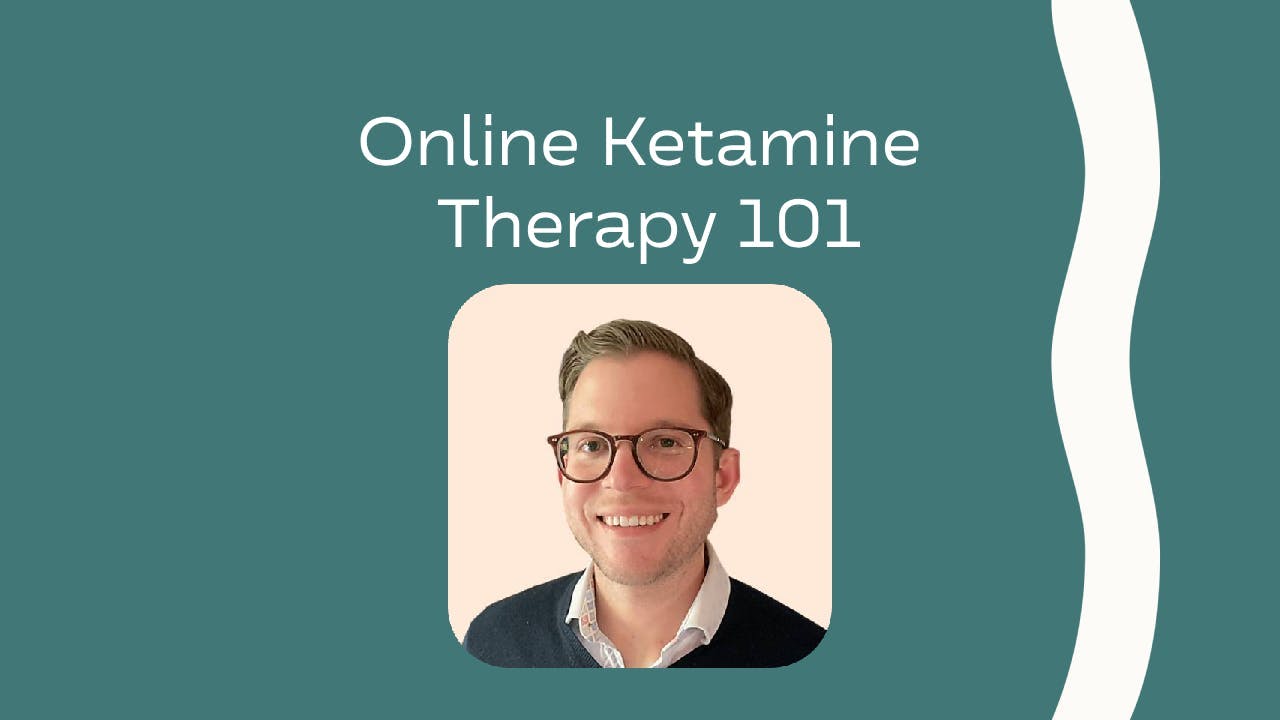
WEBINAR: Online Ketamine Therapy 101 with Dr. Mike Cooper
Anthony Mangia

Apr 12, 2023
A Guide to Intention Setting For Ketamine Treatment
Innerwell Team

Apr 10, 2023
The Benefits of At-Home Ketamine Therapy vs In-Person Clinics
Innerwell Team

Mar 23, 2023
Low-Cost Ketamine Treatment Options and What to Know
Innerwell Team

Jan 16, 2023
How to Prepare for Your Ketamine Experience
Nate Macanian

Jan 10, 2023
How do I interact with my therapist during my ketamine experience?
Nate Macanian

Jan 5, 2023
Dispelling the stigma around psychedelics
Nate Macanian

Jan 2, 2023
Ketamine Therapy for Anxiety: Complete Guide
Innerwell Team

Dec 30, 2022
Post-Session Care: What to Do Once Your Psychedelic Experience Has Ended
Jenn Sinrich

Dec 28, 2022
How to Help Others Journey Safely: A Peer Treatment Companion’s Guide
Innerwell Team